
Home › Business Consultant › Kentucky › Bowling Green
How Do I Make Sure My Bowling Green, KY Business Lasts?

Some shops on Fountain Square have been there for years. Others open with a crowd and a ribbon-cutting and are gone before the next WKU homecoming.
What makes the difference? Rarely the product, and rarely the effort. It is usually the money habits. Building those habits with Bowling Green owners, on site or by Zoom, is what Dr. Paul Borosky, DBA, MBA, does as a business consultant and business plan writer.
Make your business last by knowing your monthly break-even, keeping a cash reserve, following a budget every month and adjusting early when sales dip. Most small shops do not close because the idea was bad. They close because cash ran out before the owner saw it coming. Getting your money in order is Organize, the first stage of Dr. Paul’s Organize-Plan-Grow™ Strategy. Working with a business consultant, you get the budget and the early-warning numbers in one sitting.
Call or text (321) 948-9588. Your first 15-minute call is free.
Last Updated: November 2026
Doctor Owl in Plain English
What Is a Break-Even Point?
It is the amount you need to sell each month just to cover your costs. Below it, you lose money. Above it, you make some. Every owner should know this number by heart.
Pearl the Platypus is a character in Dr. Paul’s Fabled Forest Business School books. Budgeting to last works for any small shop.
Real World Help From Dr. Paul
Passionate About Your Shop. Unsure It Will Last?
Help for Bowling Green owners who want to be here in five years.
Business Consulting
Set a monthly budget, a cash reserve and early-warning numbers.
See cash flow management consultingBusiness Plan Writing
Opening or expanding with a loan? Dr. Paul is a business plan writer who builds the budget into the plan from day one.
See business plan pricingWhat Owners Are Saying
Fountain Square Sees Steady Turnover. What Separates the Shops That Stay
Fountain Square has been the heart of Bowling Green since the city’s founding, and today downtown has more than 40 places to eat, drink, shop or be entertained, WNKY noted. It is also a place where businesses come and go. The WKU Herald profiled four square businesses, a coffee shop, a vintage clothing store, a health food restaurant and a candle store, and their efforts not to become part of the turnover.
The city is paying attention. Bowling Green’s Downtown Development Division runs regular downtown meetups for owners and has launched a matching funds program to support local businesses, historic preservation and continued downtown investment.
Turnover is not unique to Bowling Green. Across the country, a large share of new small businesses close within their first few years. The reasons owners give vary: slow sales, rising rent, a partner leaving, burnout. But underneath most of them is the same story. Cash ran out before the business found its footing, and the owner did not see it until it was too late.
Downtowns near a university face an extra challenge. Traffic swings with the semester. A shop can do well in the fall, slow down over winter break, recover in spring and then lose much of its foot traffic for the summer. Owners who budget on their best months often find themselves short in the slowest ones.
Turnover on a square also hurts the shops that stay. Empty storefronts make a block feel quieter, and fewer neighbors means fewer reasons for shoppers to walk the whole loop.
Look closely at most closings and the same gap shows up. The owner knew their product, their customers and their craft. What they did not have was a monthly budget they actually followed, a break-even number they checked or a reserve to carry them through a slow season. A bad summer, a road closure or a big repair turned a solvable problem into a closing.
The shops that last usually are not the ones with the most money at the start. They are the ones that watch the money most closely once they are open.
Dr. Paul’s Insight
Pay Yourself Last, but Pay Yourself
Dr. Paul has seen owners skip their own pay for so long they burn out and quit a business that could have made it. A budget should include a modest owner’s draw, even early, so the plan is real.
The Survival Habits
What Do Shops That Last Do Differently?
Know Your Break-Even
Add up rent, utilities, insurance, payroll, loan payments and your own pay. Divide by your margin on an average sale. That is how many sales you need a month.
Write a Monthly Budget
One page. Expected sales, expected costs, expected profit. Compare it with what actually happened at the end of every month.
Build a Reserve
Set aside a little every good month until you have three months of fixed costs. It is the cushion for the slow season, the broken cooler and the closed street.
Watch Three Early Warnings
Weekly sales against last year, cash in the bank against your reserve target, and bills you are paying late. Any one slipping for a month is a signal to act.
Plan the Slow Season Now
Downtowns near a university feel the semester calendar. Plan events, offers and staffing for the summer and winter breaks before they arrive.
Get Help Early
Talk to a consultant, the SBDC or your banker when the warnings start, not when the rent is late.
A Simple Monthly Budget
| Line | Budget | Actual |
|---|---|---|
| Sales | $28,000 | $25,500 |
| Cost of goods (40%) | $11,200 | $10,200 |
| Rent, utilities, insurance | $5,200 | $5,200 |
| Payroll and owner’s draw | $9,500 | $9,500 |
| Profit | $2,100 | $600 |
Fill in the actual column within a week of month end. A budget compared once a quarter is history. A budget compared every month is a steering wheel.
Keep your business and personal money in separate accounts, too. When the two mix, it is nearly impossible to see whether the shop is making money or quietly living off your savings.
Sales came in $2,500 short and profit fell by $1,500. One month like that is a warning. Three in a row, without a reserve, is how good shops close. Seeing it in month one gives the owner time to adjust. That might mean a promotion, a trimmed schedule, a delayed purchase or a talk with the landlord. Each option is easier and cheaper when it is chosen early, not forced late.
You do not need a finance degree for any of this, but a business consultant makes it much faster to set up. Through cash flow management consulting, Dr. Paul builds the break-even, the monthly budget, the reserve target and the warning signs to watch.
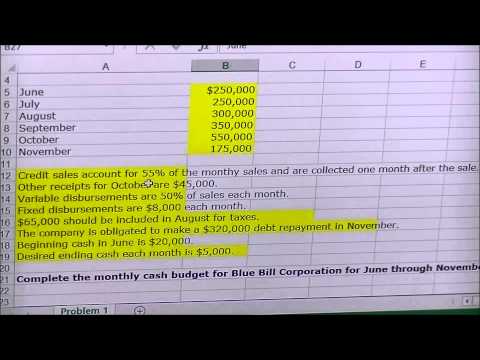
Watch Dr. Paul
Preparing a Cash Budget
The budget that keeps a shop open starts as a simple cash budget. Dr. Paul shows how to build one.
Your First 30 Days
- Your monthly break-even number
- A one-page budget for next month
- A reserve target and a savings habit
- Three early-warning numbers checked weekly
- A plan for the next semester break
Local Help for Bowling Green Owners
Bowling Green Help
- City of Bowling Green Downtown Development Division: downtown meetups and the matching funds program.
- Bowling Green Area Chamber of Commerce: member events and business resources.
- Kentucky Small Business Development Center: free coaching, with an office in Bowling Green.
These groups are independent of Dr. Paul.
Ways to Work With Dr. Paul
Want Your Budget Built With You?
Budgets and break-even work start over Zoom with your sales and bank records. For a deeper look at the operation, Dr. Paul travels to Bowling Green from Central Florida for an on-site visit. Plan on two days minimum, plus travel costs. See how on-site visits work.
More Kentucky Questions
Owners in other Kentucky cities ask different questions.
Bowling Green in the News
How Will a $210 Million Water Plant Shape Bowling Green Growth?
Updated November 27, 2026
Long projects reward owners who plan past next quarter. If your growth depends on new homes or new employers in Warren County, mark 2032 on your long-range plan. Build steady steps until then, not one big bet. That long view is where a business consultant earns the fee. Dr. Paul helps owners set a three to five year direction, so the business is ready when the capacity arrives. Read about his strategic planning consulting.
Utility news: Bowling Green Municipal Utilities is starting the largest project in its history, the Bowling Green Daily News reports.
Q: What is changing? A: The water recovery plant will grow from about 12 million gallons per day to 22 million. The total cost is more than $210 million.
Q: When? A: Not soon. Completion is expected no earlier than 2032. Commissioners moved about $4.3 million to cover roughly a third of planning and design. The firm Baird is helping finance the rest.
Q: Who is doing the work? A: HDR and Strand Associates are the engineering firms. BGMU head Mark Iverson called it by far the biggest thing the utility has ever done.
Q: Will rates change? A: The article does not say. Watch for that next.
Stepping Out of the Real World and Into the Fabled Forest
This next part steps into the Fabled Forest, the invented world from Dr. Paul’s books, where animals run real kinds of businesses. The platypus and her laundry are made up. Building a business that lasts is a real Bowling Green goal. Read more in Dr. Paul’s Fabled Forest Business School books.
Doctor Owl Teaches
Could Pearl Keep Her Laundry Open Through the Dry Season?
Doctor Owl was refilling the oil lamp and trimming its wick when Pearl the Platypus paddled up the creek bank, worried.
“The students went home for the dry season,” she said. “Half my washing tubs sit empty. Every load counts, and there are not enough loads.”
“How many loads do you need each moon to cover your costs?”
“I bought four new tubs before I counted that.”
“Then count it now. And next time the students are here, put a few shells aside each week.”
Pearl counted. She needed 300 loads a moon. In the busy season she washed 450. In the dry season, 200.
That year she saved the extra from the busy moons. When the dry season came again, her shell jar carried her through, and she did not close a single tub.
The lesson: the shops that last know their numbers and save for the slow months. Setting that up is the work of cash flow management consulting.
You Built Something You Love. Let’s Make Sure It Stays Open.
Most owners Dr. Paul helps are passionate and skilled. What they often lack is a money system that warns them early. That he can build with you. Book a free 15-minute call.
Or call or text (321) 948-9588. Or see how a business consultant can help.
Bowling Green Owners Ask About Staying Open
Why do so many small shops close in the first few years?
Most run out of cash before they reach steady profit, often without seeing it coming.
How big should my cash reserve be?
Many owners aim for three months of fixed costs.
Does Bowling Green offer help for downtown businesses?
The city runs downtown meetups and a matching funds program. Check with the Downtown Development Division.
Can a business plan writer help before I open?
Yes. Dr. Paul writes the plan and builds the budget and break-even into it from day one.
Can we talk before I commit?
Yes. The first 15 minutes cost nothing. The pricing page lists the rest.
Sources
- WKU Herald, Turnover on Fountain Square: Local business share concerns and success stories.
- City of Bowling Green, Downtown Development Division, 2026.
- WNKY, Throwback Thursday: Fountain Square, over 200 years of business.
- Bowling Green Daily News, BGMU eyes major expansion of water plant (Nov. 20, 2026).
About the Author
With a DBA from National University, an MBA in Finance from Webster University and more than 1,000 small business clients in all 50 states and Canada, Dr. Paul Borosky, DBA, MBA, brings real experience as a business consultant and business plan writer. He also writes the Fabled Forest Business School Series. Young shops building money habits are among the owners he helps most. About Dr. Paul or his books on Amazon.