
Home › Business Consultant › New York › New York City

How Can a Small Business Compete With Big Competitors?
Losing customers to a bigger rival that charges less is a brutal spot. In New York City, that rival is a national chain on almost every block. Yet the chains keep shrinking here, and the shops that win offer something a chain cannot. Your craft is not the problem. Competing on something besides price is a skill few owners were taught. Finding the customers a big rival serves poorly is the work Dr. Paul Borosky, DBA, MBA, does as a business consultant.
Compete with bigger, cheaper rivals by choosing the customers who value what you do best, then winning on service, speed, expertise or fit, not on price. Stage 3 of Dr. Paul’s Organize-Plan-Grow™ Strategy, Grow, is where you sharpen that position. A consultant helps you name your edge and price it.
Call or text (321) 948-9588. Your first 15-minute call is free.
Last Updated: November 2026
Doctor Owl in Plain English
How Do I Compete With Larger Businesses That Charge Less?
Do not fight the giant on its strongest ground. A big rival wins on price and volume. You win on knowing the customer, solving the hard problem, showing up fast or carrying what the big store will not. Pick the customers who care about that. Then raise your service and hold your price.
Real World Help From Dr. Paul
Losing Sales to the Cheaper Store?
Choose the help that fits your fight with bigger rivals.
Business Consulting
Name your edge, pick the customers who value it and set prices that protect your margin.
See sales and pricing consultingBusiness Plan Writing
Opening a second shop to compete? A plan shows investors why customers choose you over the chain.
See business plan pricingBusiness Plan Template
Each template’s Excel model lets you test a price change against your real costs.
Browse the templatesSmall Business Education
Worried a price increase will scare people off? A free lesson covers raising prices without losing customers.
Read the free lessonSuppliers squeezing you as hard as your rivals? See how a New York City owner plans cash so suppliers get paid on time.
How This Guide WorksFirst, the problem: what happens when a bigger rival undercuts you, and what the chain store numbers show. Then the solution, five moves to compete without cutting price. A Doctor Owl story follows. The general store in it is invented; the owner losing sales to the big warehouse store is not. Prudence learned to stop chasing the whale. More stories are in Dr. Paul’s Fabled Forest Business School Series.
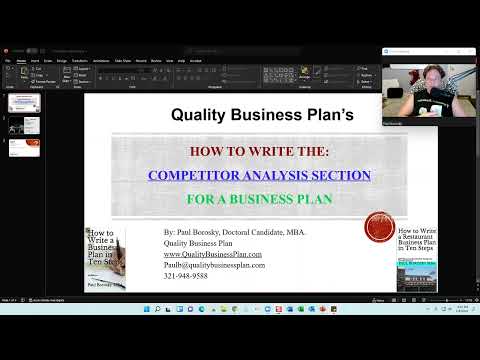
Watch Dr. Paul
How to write a Competitor Analysis Section for a Business Plan
You cannot beat a rival you have not studied. Dr. Paul shows how to size up a competitor and find the gap they leave open.
The Problem
Why Does Matching the Big Store’s Price Fail?
A national chain buys in bulk, spreads its costs across hundreds of stores and can lose money on one item to win the basket. A small shop that matches every price gives away its margin and still loses. The chain can wait you out.
The chains are not unbeatable in this city, though. Chain stores across the five boroughs fell 1.3 percent in 2025, a net loss of 112 locations. It was the sixth decline in eight years, according to the Center for an Urban Future.
Source: Center for an Urban Future, State of the Chains, as reported by The Real Deal (2025) and The Real Deal (2024).
Eighteen national chains closed every store they had in the city in 2025. Size did not save them. Customers here reward the shop that fits their block, their schedule and their problem.
The Solution
How Does a New York City Owner Win Without the Lowest Price?
Five moves, in this order.
Study the rival honestly.
Shop them. List what they do well and where customers wait, get confused or leave empty-handed.
Why it matters: Their weak spots are your opening.
Pick your customers.
Choose the group that values expertise, speed or a hard-to-find item more than the last dollar.
Why it matters: Bargain hunters will leave you for a coupon. Your customers will not.
Name your edge in one sentence.
Same-day delivery in the neighborhood. Advice from someone who has done the job. Stock the chain dropped.
Why it matters: If you cannot say it, customers cannot repeat it.
Price the edge, not the item.
Bundle advice, setup or delivery with the product. Hold your price on what the chain cannot match.
Why it matters: A bundle is hard to compare against a shelf tag.
Make it easy to come back.
Remember names, follow up after big purchases and reward regulars.
Why it matters: A chain has customers. You can have neighbors who choose you.

Watch: Dr. Paul Explains
What's in a Marketing Plan. Example Marketing Plan from Dr. Paul's Organize-Plan-Grow Strategy. Picking your customers is the heart of a marketing plan. Dr. Paul opens a sample plan and shows each part.
Not open yet? Before you sign a lease, walk the block and list every chain within ten minutes. Write down what each one does poorly. An industry business plan template turns that list into a competitor section a lender will read. Future owners in all five boroughs can book the free call as well.
Manager, not the owner? You hear customers compare prices out loud. Write down what they say the big store does badly. Hand that list to the owner each month. It is free competitive research.
Doctor Owl Teaches
How Did Prudence Win Back Her Shoppers?
Doctor Owl stood at the market cart, tasting three cheeses before he chose one. The cheapest was not his favorite. Prudence the Pangolin walked up in her cardigan, keys on a chain, and spoke quietly.
“Half my shoppers ride the barge down to Wendell’s Warehouse now,” she said. “He sells nails and lamp oil for less than I pay for them. How do I compete with larger businesses that charge less?”
Doctor Owl held up a cheese. “This one costs more. I buy it because the cheesemaker tells me which one fits my supper. What does Bough and Burrow do that a warehouse at the end of the deep-water dock cannot?”
Prudence knew every old burrow in the hollow and which hinge fit which door. Wendell never came inland. His clerks had never seen a burrow.
Prudence had always said “Better safe than sold” and spent nothing on telling anyone. This time she painted one sign: Repair advice free, keys cut while you wait, heavy orders delivered by noon. She sent a note to every builder who bought from her twice.
Some bargain hunters kept riding the barge. Prudence’s sales grew anyway, and her margin grew faster. The builders came back every week.
The lesson: you beat a bigger, cheaper rival by serving the customers who value what the giant cannot give, and by telling them so. See how Dr. Paul helps owners compete without cutting price.
Bough and Burrow General Store stands only in the Fabled Forest. New York City owners competing with the chain down the block work in every borough.
Dr. Paul’s Insight
Price Is the Giant’s Weapon
When a small owner cuts price to match a chain, Dr. Paul sees a business picking the one fight it cannot win. The chain has deeper pockets and a longer runway. Your weapons are different. You know the customer by name, you can bend the rules, you can show up in an hour. Fight with those. Let the giant keep the bargain hunters and the thin margins that come with them.
What Can a New York City Owner Do This Week?
Four steps toward winning on something besides price.
- Shop your biggest rival. Take notes.
- List your best ten customers. What do they have in common?
- Write your edge. One sentence.
- Pick one bundle to test. Product plus service.
Where Can a New York City Owner Get Free Help?
Two free sources of help for city owners; neither is connected to Dr. Paul.
- NYC Business Solutions Centers: Free city help with financing, legal questions and growth, run by the Department of Small Business Services in all five boroughs.
- SCORE New York: Free mentoring from experienced business leaders, with chapters serving every borough.
Which New York City businesses face bigger, cheaper rivals most?
Hardware and home goods shops, pharmacies, coffee shops, salons, gyms, bakeries and small grocers. The 2027 outlook for salons goes deeper.
How does Dr. Paul work with New York City owners?
Dr. Paul studies your rival and your customer list with you on Zoom, then helps name your edge and set the price. He is based in Central Florida and works with owners in every borough.
Which Other New York Cities Have a Page?
Upstate city pages each take on a different owner problem.
Ready to Stop Racing to the Bottom?
Dr. Paul works with owners who are great at what they sell and want help with the business side, like winning without the lowest price. Bring the name of your biggest rival to a free 15-minute call. Leave with the first draft of your edge. A manager can join too. Services are listed on Dr. Paul’s consulting services page.
Or call or text (321) 948-9588.
About the Author
Dr. Paul Borosky, DBA, MBA, has helped 1,000+ small business clients in all 50 states and Canada. He earned a DBA from National University and an MBA in Finance from Webster University. Dr. Paul’s Fabled Forest Business School Series is one part of his 90+ book catalog. Helping small owners compete with big rivals is a favorite part of his practice. About Dr. Paul or his books on Amazon.
What Do New York City Owners Ask About Bigger Rivals?
How do I compete with larger businesses that charge less?
Pick the customers who value service, speed, expertise or selection, and win on those instead of price.
Should I ever match a chain’s price?
Only on a few items customers check, and only if the rest of the basket carries your margin.
How do I find my competitive edge?
Ask your best customers why they choose you. Their answers are your edge, in their words.
Will customers pay more at a small shop?
The right customers will, when you solve a problem the big store leaves alone.
Can a business consultant help me compete with a big rival?
Dr. Paul helps you study the rival, name your edge and set your prices. Fees are on the pricing page.
What Should a New York City Owner Read Next?
Sources
- The Real Deal, Chain stores shrink footprint across NYC (Center for an Urban Future, State of the Chains 2025).
- The Real Deal, Chain stores decline in NYC for fifth time in seven years (State of the Chains 2024).
- amNY, Chain stores in NYC declining (18 chains closed all city stores in 2025).